Grey alder thrives best in a soil which is calcareous, fertile and moist. There grows into thickets.
Grey alder often grows on shores, by roadsides and alongside fields and meadows.
Its roots bind nitrogen from the air and the leaves are green when they fall, so they decompose into quality soil. Thus, grey alder heals the soil well.
Grey alder endures some amount of shadowing but it does not cope so well with dry conditions.
In a good habitat grey alder grows fast. It reaches felling size in only 30 years, and, therefore, it does not start to rot.
When grown densely enough, grey alder becomes quality wood, as the trunk grows branchless and as straight as possible.
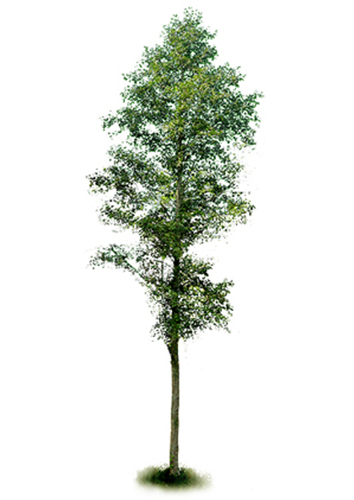
Grey alder is a tree or a large bush which grows to as much as 20 meters in height.
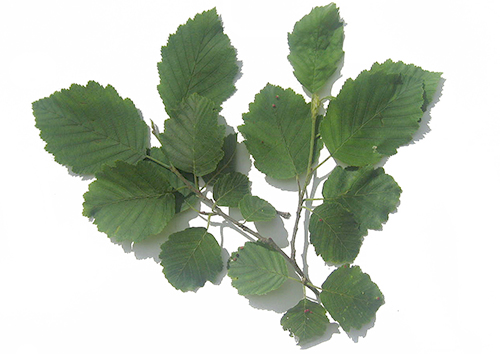
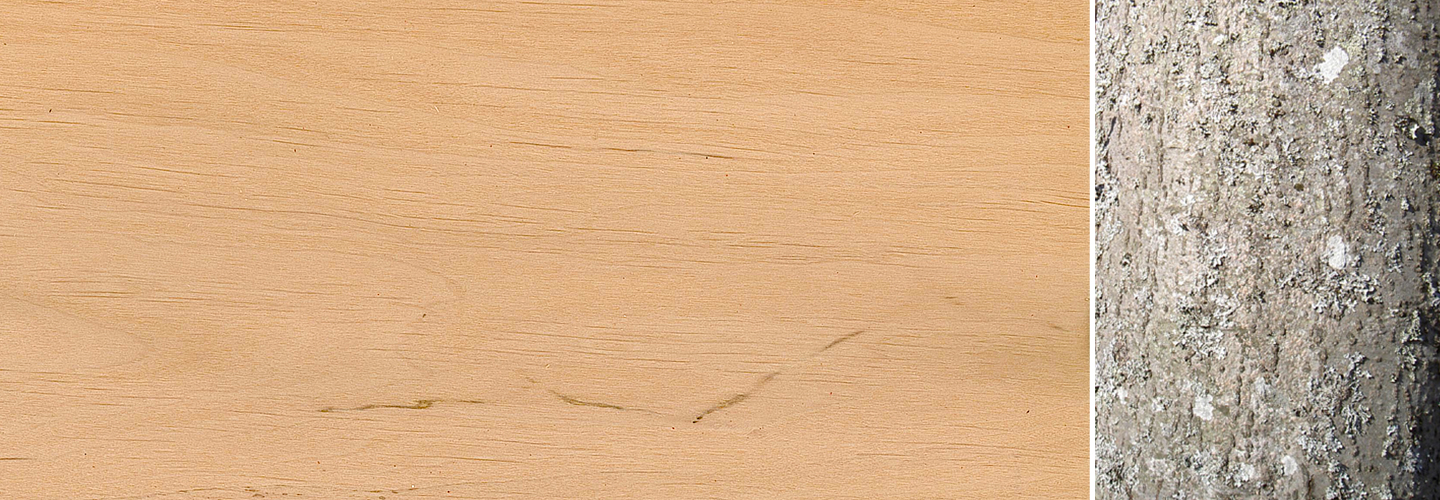
The crown is conical, the trunk smooth and the bark grey. The underside of the leaves is also greyish.
It has an extensive root system that grows root sprouts and stump sprouts.
Grey alder is used as a protective tree in forestry. It is a short-lived species which grows very fast when young. However, the best growth is over after 30 years.
Grey alder reproduces from seeds and shoots.
A quality grey alder timber has a straight stem free of knots that is over 20 cm in diameter at chest height. The trunk must not have cracks, water sprouts or decay
When grown densely enough, grey alder grows a straight and branchless trunk which is suitable wood for carpenters.
The wood is reddish and the sap- and heartwood do not have big differences in colour. The time of felling, the growth conditions and the drying process affect the shade of the wood.
The wood of grey alder is soft and brittle. It is straight grained, even in quality and easy to work and surface finish.
It is easy to work and split. It shrinks and swells only a little.
The wood dries quickly. Fresh grey alder rots easily but it becomes more durable once dried. The weight of air-dry sawn timber is 500- 530 kg/m3.
A special feature is that flame and ”bird eye” patterns sometimes occur.
A-quality grey alder is even in colour, free of knots and decay. It is used in carpentry, in the production of musical instruments and interior decoration panels.
Recently, grey alder has been very popular as a raw material for carpentry.
It is used in carpentry, in the production of musical instruments and decorative items. It is especially suitable for lathing and carving, for decorations and sauna benches. Other uses from the past: wooden shoes, heels, shoe lasts, reels, water pipes, tool boxes, molds for making glass products and hats.
Alder is also excellent as firewood and smoking chips.